
Five Dimensional Teams
Some things between two people are easy. Others never are.
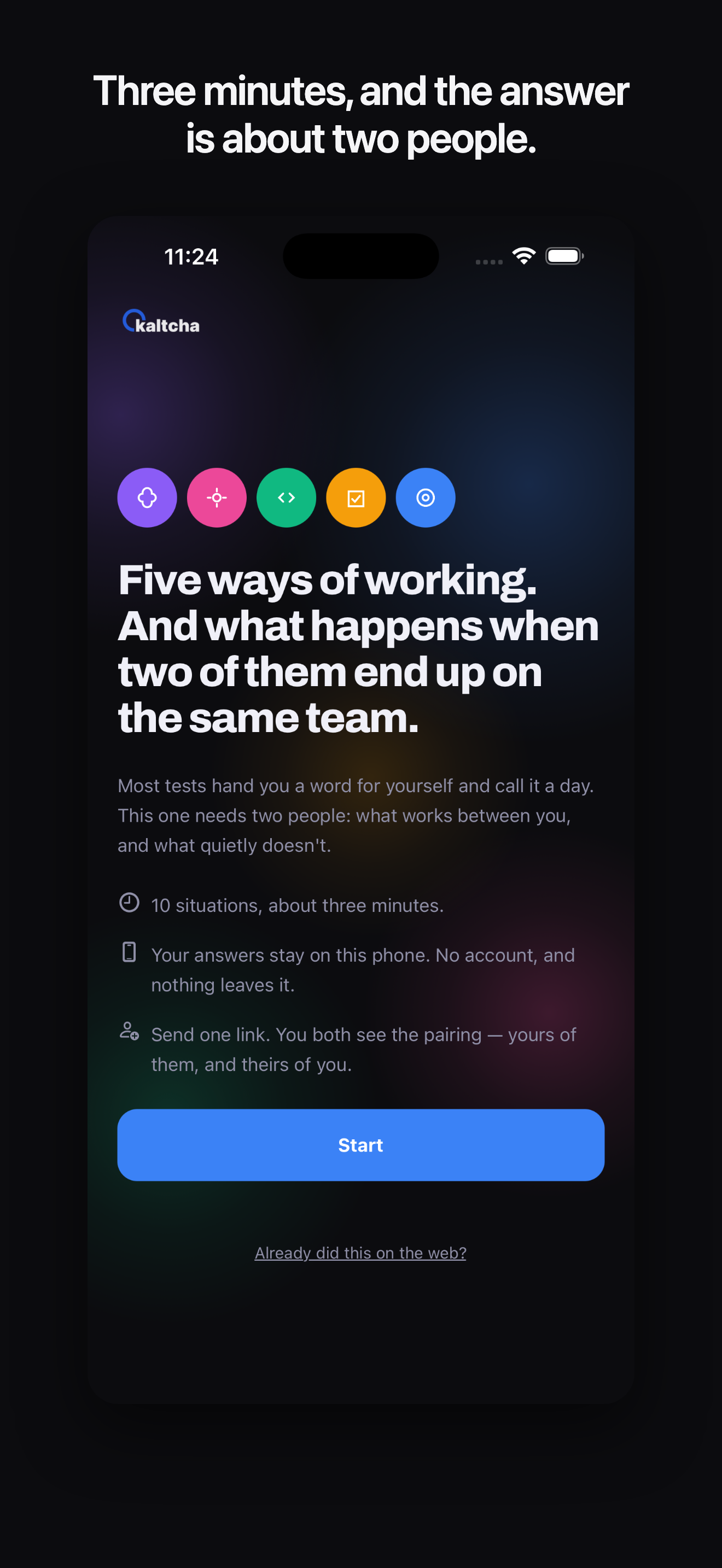
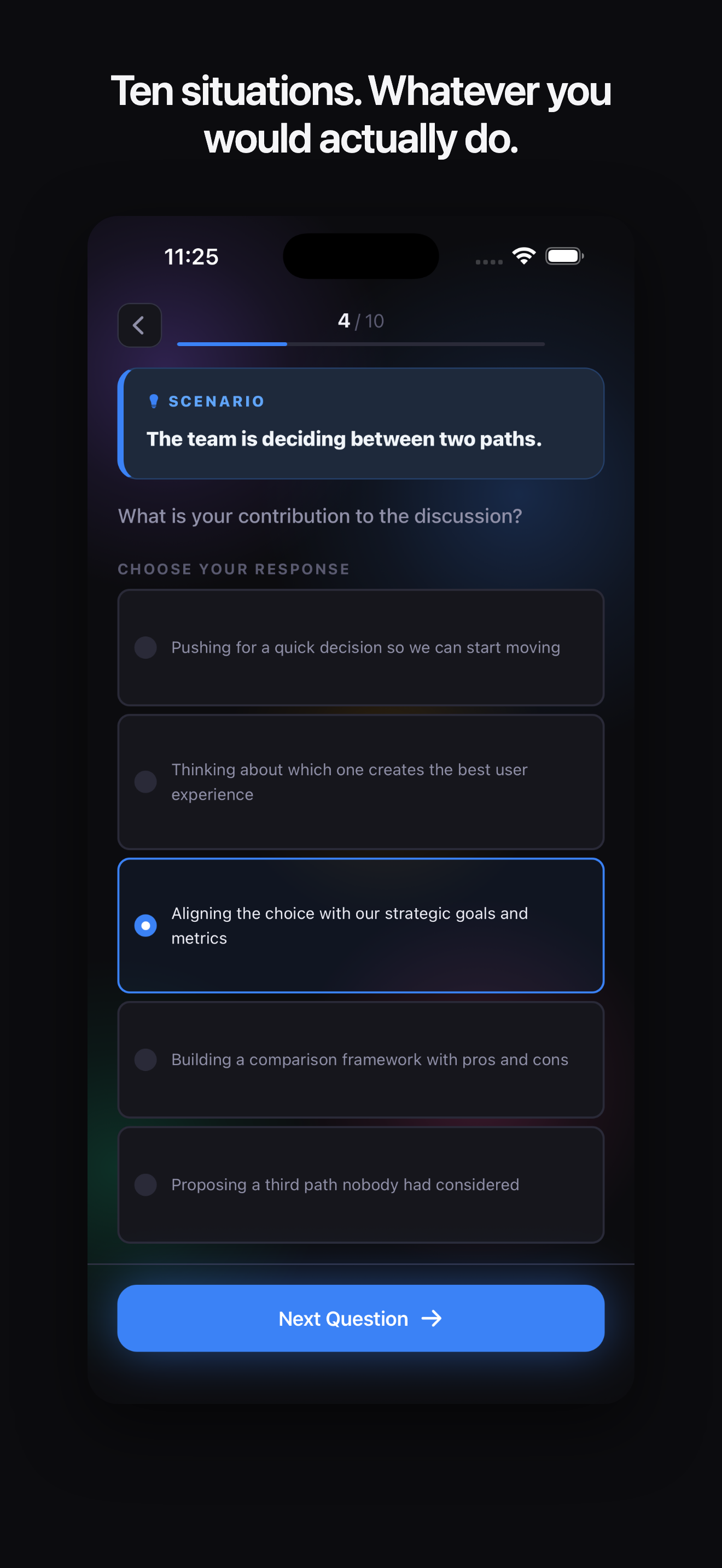
Ten situations, about three minutes. Send one link to somebody you work with and you’ll both see which is which.
Free · no account · never sent to an AI
Being built now
This, on your phone.
The thing one profile can’t tell you
How you land on them isn’t how they land on you.
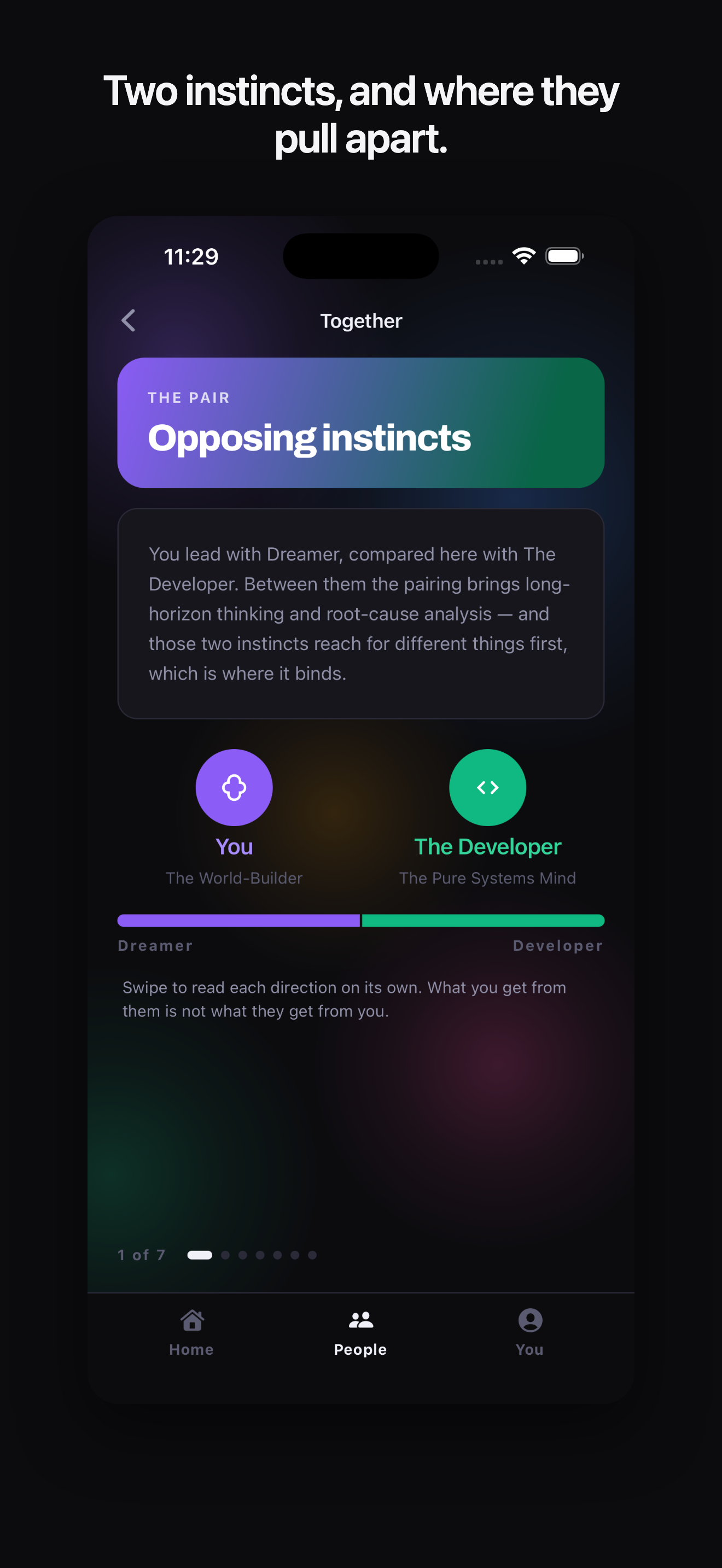
A real pairing between a Dreamer and a Designer. Change the direction and it says something different about the same two people — because it is something different.
Four readings from one pairing. Try all four.
What works — you to them
The idea gets somewhere to land
You think a long way ahead. They think about how it'll land on an actual person. What you imagine, they turn into something somebody can feel — the idea gets somewhere to go, and a reason to care.
Read as a Dreamer, about a Designer.
The five dimensions
Not the job you hold. The way you go at it.
A Designer can run a support desk or run a company. Put a Developer and a Doer in the same job and they will do it differently — one going to the mechanism underneath, the other starting and finding out. Pick one and see what it actually says.
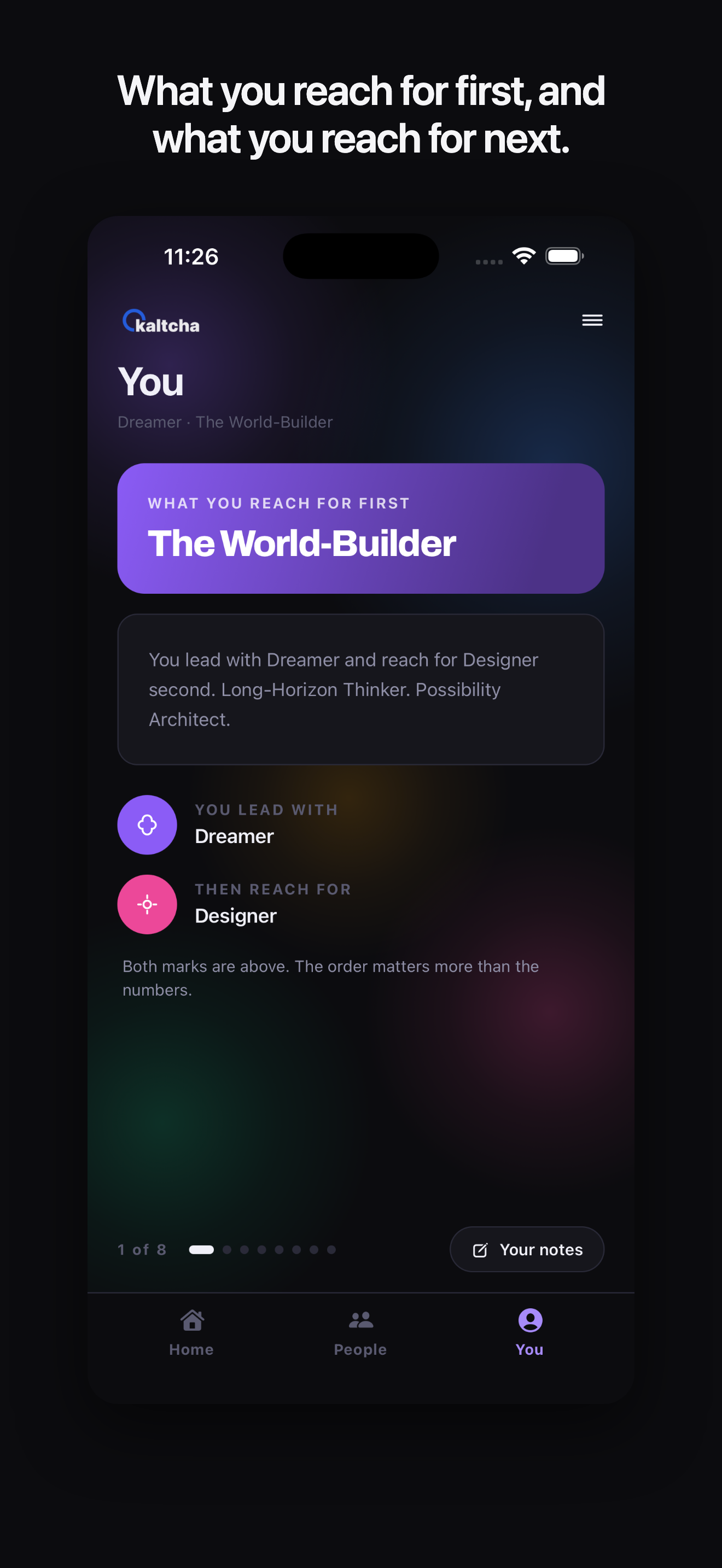
Long-Horizon Thinker. Possibility Architect.
The Dreamer
You think about what isn't true yet. While everyone else is handling today, you're already describing what comes next — and describing it well enough that people want to go there. That's not daydreaming; it's where a team gets a direction in the first place. The hard part is the middle. The long, unglamorous stretch between the idea and the finished thing.
What you get from them
- Long-horizon thinking
- Direction-setting
- Pattern connection
- Inspirational framing
What this is for
Three things you have already noticed.
None of them is a personality problem, which is the whole reason they keep happening.
The same two people grind on the same kind of decision, every time. It gets filed as a personality clash and managed around forever.
Something is easy with one colleague and impossible with another, and nobody can say what the actual difference is.
You rewrite their messages twice before you send them. You have never worked out why, and you would not say it out loud.
They are two ways of working meeting each other, and they are predictable once you can name them. There is no compatibility score here — a score ends the conversation, and this is for starting one.
Find out what you’re like to work with.
Then find out what it’s like to work with you. Those turn out to be different questions.
Private by design
It never leaves your phone.
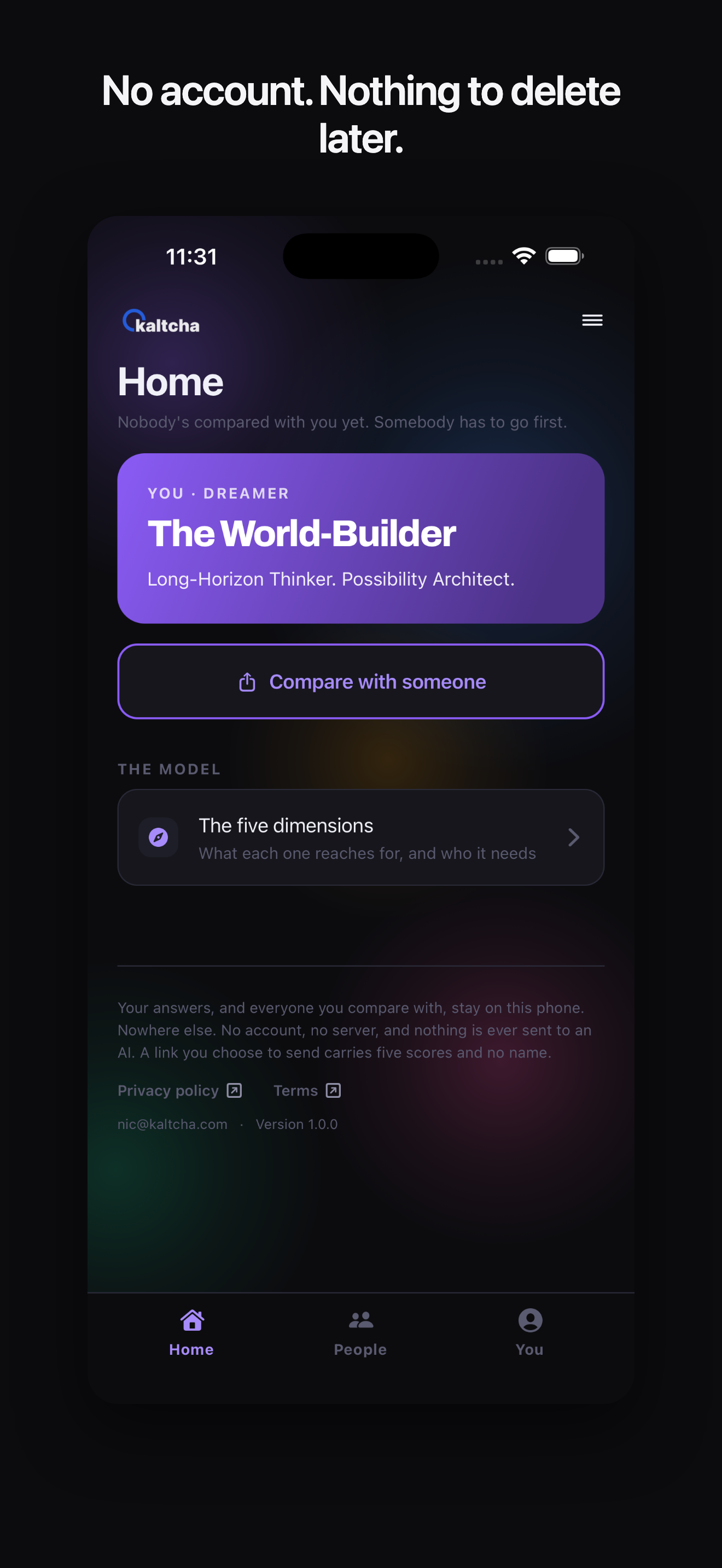
No account. Nothing stored about you. Never sent to an AI. Every word decided in advance.
A link you choose to send carries five scores and no name.